Showing posts with label memoirs. Show all posts

Wednesday, July 14, 2010

Of Love and Sports

¡Hola! Everybody...
Today, I wax nostalgic... somewhat.

* * *

-=[ Of Love and Sports, the Assassination of New York, and Blackouts ]=-

The two were meant for each other. One’s a born liar, and the other’s convicted.

-- Billy Martin on Reggie Jackson and George Steinbrenner


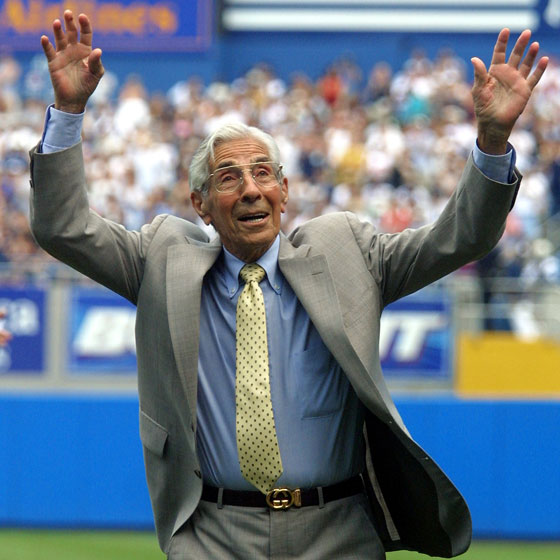
Meatloaf’s Paradise by the Dashboard Light is a song is about a teen-aged boy trying to convince a girl to have sex with him in a car. Baseball is used as a metaphor for sex. Sex would be the “Paradise” for him, but she holds out until he says he loves her and will stay with her forever. The young man almost “scores,” but is thrown out at the plate when the girl decides she won’t have sex with him. The voice of the sports announcer used in the song is none other than Phil Rizzuto, the long-time Yankee announcer.

It was only fitting that colorful Yankee owner, George Steinbrenner, passed away on the day the baseball All Star classic was to be played, therefore overshadowing the game. It’s fitting because old George loved the limelight. But today I come here not to praise Steinbrenner, but to bury him...

Whenever I think of the 70s, the Yankees, and my beloved City, I always think back to those hectic horny days of an abandoned New York reeling from a massive white flight and in the in thrall of a series of Yankee teams that rewrote the way the game is played.

The “Bronx Zoo,” as one of the players would later call the team, was a collection of high-priced baseball stars with huge egos and a determination to win that was only outmatched by their owner’s. They would fight other teams and one another. Everyday, there was some kind of drama brewing about in the midst of the assassination of one of the greatest cities in the history of humankind. One day, their most famous and controversial manager, Billy Martin, woke up and, in a fit of frustration declared that one was a “convicted liar” (referring to Steinbrenner’s conviction stemming from the Watergate scandal) and the other a “born liar” (referring to the team’s volatile superstar of superstars, Reggie Jackson).

Martin was promptly fired for the first of many times... (officially, he resigned, but he would've been fired had he not)

Whole sectors of the city was burned down or literally aflame as the real estate and financial Elites slashed city services, spurring slum lords to burn their properties down in order to collect the insurance. Even so, we had the Yankees to distract us -- and what a team that was! Who can forget the year they came back from insurmountable odds to catch up to and then beat the hated Red Sox in dramatic fashion during a special playoff game? Ask any real New Yorker, and he or she can tell you in vivid detail what they were doing when Bucky dent hit that famous homerun.

There was also that summer of the infamous Son of Sam and “The Blackout.” I remember that summer well; a sweltering city was caught in the grips of the actions of a lunatic, culminating in a total blackout one hot, and sizzling city summer night. Already economically devastated, the looting that took place during that blackout destroyed whole sectors of business districts throughout the city. So many people were caught looting, that the police stopped arresting them and instead beat them down and sent them packing.

I remember there was a downpour in the middle of that night, and it was then, while I organized demands that bodega owners give out candles and milk to women with children, that I fell in love with “La Mora,” a cinnamon-skinned, dark-haired Taina princess -- the same one who would leave me overfucked, underfed, and heartbroken that same cold September.

GAWD! What a summer!

Nevertheless, no matter what, there were the Yankees, fighting everyone including themselves. I remember Billy Martin pushing up on Reggie Jackson and challenging him to a fight on national TV one hot summer night. Martin was a scrawny, scrappy man, known for fighting dirty, drinking with his ballplayers, and his self-destructive tendencies. In short, Martin was the quintessential New Yorker and we loved his crazy ass because he didn’t give a fuck. A brilliant manager, the only way he knew how to motivate people was through intimidation. And here he was, in the midst of a high-powered, high-priced, highly talented group of professionals. There was never a dull moment.

All the while, up front and center and adding fuel to the fire was Steinbrenner. He didn’t understand losing, didn’t understand patience. He wanted to win everyday. He was a mess, and more often than not, his rash decisions often cost the club. But he was a brilliant salesman, a modern-day Barnum, and he understood how the game was changing and he pushed that too. Let’s be clear: Steinbrenner was essentially a right-wing prick. He took hundreds of millions from the City in order to renovate the Stadium and he reneged on almost all his promises. As bad as the City was doing those days, we never really saw a real profit from all those subsidies. It was welfare for the greedy, for sure. The Stadium itself is a dichotomy: situated in the South Bronx, the symbol of urban decay -- Fort Apache.

Steinbrenner was an unmitigated pig who didn’t give a fuck about anything or anybody. Over the years, however, I learned to appreciate some things about him. For one, he gave people chances. He was a sucker for a redemption song, as illustrated by all the chances he offered to the drug addicted Darryl Strawberry, Doc Gooden, and Steve Howe, for example. So I guess Steinbrenner wasn’t all evil. He did give us the Yankees of the late 1970s, and the team’s antics served as the backdrop to my own hilarious crimes that have now grown to story-time delights and I guess for that I should be grateful. So today, I’ll bury old George, but I’ll do it while remembering Meatloaf, Phil Rizzutto, and, of course, Reggie Jackson (who was, after all, part Puerto Rican) hitting those back-to-back-to-back home runs during the playoffs.

Rest in peace, George...

Eddie

Thursday, December 24, 2009

A Nuyorican Christmas Story

¡Happy Holidays Everybody!
The following is a tradition with me, so you may have read it already. I post it in the humble hope that it will bring a smile to your lips and remind you of the important things in life -- the things that really matter.

Sometimes things happen in your life that affects forever the very way you perceive reality. Some events are negative, acting as baggage for all your later interactions. Others are life-changing epiphanies that work to make life more joyful. Which ones do you cling to?

Let me tell you a story...

* * *

The Rosarios ca late 60s/ early 70s

-=[ The Empty Boxes ]=-

In the depths of winter, I finally learned that within me there lay an invincible summer.

-- Albert Camus


It was a year I would never forget. I was about 16, in the process of reading every “great book” ever written, helping put out an underground newspaper, and young and full of life. My sisters (to my delight) had many beautiful friends and our home was the center of activities for our vast network of friends and family. It was a time of change and turmoil: the Vietnam War still raged and it seemed as if all the institutions we took for granted -- marriage and gender roles, the meaning of freedom -- were being questioned and reformulated. The strategies used by African-Americans and Latino/as in the struggle for Human Rights were being used by a wide range of groups: women were burning their bras and Gays were marching for their rights. In short, it was a time of change and the times, as the song went, were a’changin’.

This particular year, however, was a difficult one for my family: our stepfather was arrested because of a scuffle with police and sentenced to a year in jail. He was our breadwinner and that meant that our main source of income was gone. Compounding our financial difficulties was our mother’s pregnancy, she would eventually give birth to our youngest brother, Vincent, the following June.

As the oldest child, I had always felt a deep sense to protect my mother and siblings. I had to grow up pretty quick because it was expected of me to be more than a big brother; I had to be a power of example for those younger than I. Somehow, I felt I should be doing something to contribute and it was frustrating. What disturbed me the most, however, was when I caught my mother crying. Though I always resented having to be the adult in my interactions with her, my mother was nevertheless a strong woman who managed to make her place in a world that was both hostile and violent towards her. If she was despairing that meant things were really screwed up.

My sisters and I helped by working at a local supermarket after school. I worked delivering groceries and my sisters staffed the cash registers. Of course, me being the radical in the house, I was promptly fired for calling the owner an Uncle Tom and an oppressor of his own people. Sometimes we would get our groceries because my sisters would not charge up the register when my mother shopped. Things got worse at the onset of the holidays. We called a family meeting and we all agreed that, with the exception of our youngest brother, Edgar (who was eight), we would forego gifts for Christmas. My mother didn’t take this too well and it pushed her to her dark side, often succumbing to bouts of sadness interspersed with rage. What Nuyoricans called ataques de nervios (nervous attacks).

We made do just as many other poor families did at that time: welfare augmented by small-scale attempts at entrepreneurship. Sometimes my mother would buy a bottle of rum, or some other item, and raffle it off at the Bingo parlor: if everyone paid in a dollar, she would be able to earn a profit and still offer a decent prize. We also had an extended family and they would help as best they could, though they too were often financially extended and living from paycheck to paycheck.

In short, it was getting to be a really sad holiday season. The house became less full, as our situation served as a basis for shame and as we gradually dropped off our activities with our friends the ensuing quiet was disturbing. Then one day, the Friday after Thanksgiving, we took out the old artificial tree. We all share a warped sense of humor and my sisters and I started joking about how lonely the tree would look without any gifts. Soon we were cracking each other up, trying to outdo each other by coming up with the most twisted reason why we should, or shouldn’t, put up the Christmas tree.

In the end, we decided to put it up and, while playing traditional Puerto Rican Christmas songs, we slowly got into the spirit of things. Soon enough, the house rang out with laughter and song and friends were called up to come and help. I don’t know if my perception is clouded by bias or the passage of time, but I swear that that old tree never looked so beautiful. We really put our creative energies into fixing up the house too: we gift wrapped doors, put up mistletoes, strung lights on the windows -- we created the best display on that Brooklyn block.

Still, the tree did look “lonely” or bare, without gifts. So someone, one of my sisters I think, came up with the idea of collecting empty boxes and wrapping them up as gifts. Of course, as is usual in the Rosario household, we took it to an extreme. Our rather large tree was soon dwarfed by a mountain of elegantly wrapped “gifts.” People would visit and comment on how “beautiful” the tree was and we would secretly laugh because we knew they were only saying that in part because of the many “gifts.” It was our own little private joke.

I have to admit that while our circumstances were extremely difficult that year, I can’t remember a more joyful holiday season. Soon our apartment sang once again with the sound of young people engaged in the daily activities of life. We came to believe that the tree radiated joy, that it attracted people, and it was true that many people would come and visit. I guess maybe everyone else was having a hard time and the joy in our house was sort of like a warm fire to ward off the chill of winter in America. The tree became almost like another family member that we tended to and nurtured. People would visit and you could tell immediately that the joy was infectious. The “joke” was a constant source for new comedic material and we would create even more elaborate “gifts” to put at the base of that tree.

Nuyoricans celebrate Christmas Eve -- Noche Buena. Christmas day is for the kids and for the adults to nurse hangovers. That year, a huge Christmas Eve party, attended by everybody-and-their-mother, capped that holiday season. The owner of the supermarket where my sisters worked contributed the ingredients so that my mother could make her famous pasteles (a Puerto Rican plantain/ meat dish) and pernil (pork suckling). All our friends and family attended and the party lasted well into Christmas morning. I don’t think it snowed that Christmas, but I remember that the party became the basis for several legends -- a storytime delight to be recounted for years to come. It became a marker for community events as in BC and AD: Before and After “The Christmas Party.”

The party itself was rambunctious -- more rambunctious than normal. The reason why poor people can party is because they know all too intimately the ups and downs of life and whenever the opportunity arises, they party with an almost religious fervor. Of course, there was plenty of drama that Christmas Eve. Someone was caught playing his wife dirty, a woman was accused of being a husband stealer, old jealousies and rivalries were re-ignited, and quite a few made fools of themselves. There was my step father’s aunt, who insisted on flashing her panties at everyone and poor old Frito who would never live down the fact that he got so drunk he pissed on himself.

The p[arty was a microcosm of the full catastrophe of the human condition in all its shining glory. In short -- a good time was had by all.

Finally, Christmas morning came, and it was time to clean up the house and dispose of all the “gifts.” I started collecting the empty boxes to throw them out, but our mother stopped me.

“You can’t throw out the boxes!” she yelled out, an alarming note of hysteria in her voice.

We looked at one another, fearing our mother was about to have another ataque de nervios, but then we saw the smile on her lips.

We had to tear through all the empty boxes in order to find the real gifts my mother had embedded into that huge pile. I will never forget my gift that year though I have had many richer Christmas’ since: it was a digital watch with an LED readout that were fairly new and trendy at the time. I know it didn’t cost much, maybe $5, but I treasured it and wore that watch for a long time.

Why this story?

For one, the experience taught me a lesson that was the greatest Christmas gift of all: that you always have a choice with how to respond to adversity. Yes, the fact remained that we sometimes were hungry and our clothes weren’t the best. There were times we couldn’t afford basic needs or even school supplies. But we learned to face these hardships with humor and strength of character. That year could easily have been much worse, but facing our hardships in a realistic but joyful way -- that lesson would stay with me for the rest of my life. For me, this is the taste of life itself. The One Taste.

So, if you ever catch me smiling, try to remember where that smile comes from It comes from the knowledge that essentially material gifts are usually empty. I smile because I know the pretty boxes are empty but my heart is full…

Happy Holidays! You are loved. May you all know true happiness.

Edward-Yemíl Rosario © 2004

* * *

[The above is an edited version of a story from my unpublished memoir tentatively titled, 704 E. 5th St.: Ataque de Nervios and Other Stories (or some shit like that). Please, if you feel moved to share this story, feel free to do so, but I ask that you attribute the story appropriately -- with my name attached. Otherwise, I will have to sue your broke ass! LMAO!]

Thursday, September 3, 2009

Despair and Hope

¡Hola! Everybody...
I like to say I stand at the intersection of knowledge and action. There were times when I stood in other places...

* * *

-=[ The Prison Chronicles ]=-

To be truly radical is to make hope possible rather than despair convincing.

-- Raymond Williams


I stood there in the cold late fall drizzle, my hands and feet shackled. It seemed as if this correction officer liked to march us through the streets to the bowels of Manhattan’s infamous Tombs. All the other officers would drive the bus right into the garage.

I stood there shackled shivering in the late fall November drizzle as a line of schoolchildren, their faces bright and shiny, passed by, staring at me. They looked at me, as children are wont to do, out of curiosity and fear. I was a bad man. I stood there wishing I could become invisible when I saw her. I hadn’t seen her in more than ten years, but we were lovers for several years. We were in a relationship during the late 70s/ early 80s. And here she was ten years later, long legs and that maddeningly, but oh-so-sexy stride. I tried to avert my eyes, hoping she wouldn’t see me; hoping that she wouldn’t see the spectacle of a man shackled in front of a group of school kids and she walked right past me. I managed to exhale.

But then she stopped...

She saw me, it just took a second for her mind to register.

She turned around and said, “Eddie?”

We locked eyes and she really saw me. I managed a shrug, as if to say, “Yeah, this is me and everything the situation implies.” She dropped her briefcase, ran towards me, and took me in her arms and that’s when the officer yelled.

“Step away from the inmate, ma’am!”

I’ll never forget the look of utter confusion on her face.

“Look, he’s my ex-husband, and I’m an officer of the court, could you just let me talk to him briefly?” It was a lie, I wasn’t her ex-husband, but she was always quick on her feet. We stood there, looking at one another. I just didn’t have anything to say. I mean, what do you say?

“Can I get you anything, Eddie baby?” That’s what she always called me, “Eddie baby,” it was our inside joke for a long time.

I managed to give the patented Eddie-as-rake smile and said, “Sweetie, there’s nothing you can do for me. I’m just sorry you had to see me this way.” That’s when the officer took me away.

That was the day of my sentencing.

My experiences inform my politics. I would like to think that I am an “organic” intellectual in the mold of an Antonio Gramsci or a Raymond Williams. Well, those guys were giants, I’m nowhere near their league, but they serve as my role models in many ways. I come from the poor and working class, the unemployed, the incarcerated, and I see my role as someone challenging any indoctrination they may have adopted from the bougies.

I am a part of their culture and my life experiences have taught me the importance of emphasizing their importance in the political formation of society. I love the fragmented, crazy, often courageous, and outlandish characters of my youth. Many of whom would find their way to my mother’s doorstep. The unfrogiven, as I liked to call them. People whose lives were tortured fragments, pieces of shattered hearts and dreams, sometimes kept together by a boundless spirit. Sometimes not. I have met many broken spirits during my travels.

These people always held high hopes for me, someone they saw as intelligent, so gifted. And on that day, standing there shackled and humiliated, shivering in the drizzle of a late November overcast day, I remembered all those lost souls, who held so much hope for me,

It an apparent attempt to prove the cliché of life being stranger than fiction, the Fates conspired, and I met my old girlfriend again fifteen years later. That day I stood in the sunshine of late spring day as a free man.

Love,

Eddie

Monday, August 24, 2009

Freedom is...

¡Hola! Everybody...
The following story is totally fabricated... LOL

* * *

-=[ Freedom ]=-

I escaped prison the day I broke free of the shackles of my mind.


I laugh when people who know me ask, “How did, you know, how did you survive being in prison?” I laugh because most of the time what they are really asking is if I was able to avoid getting fucked in the ass while I was incarcerated. I don’t possess an imposing physique and my looks are not what people typically consider “jail material.” In fact, I could easily pass for the good guy next door. I’m also “articulate.”

::arches eyebrow::

My answer -- that I survived by using my most powerful tool, my intelligence -- doesn’t seem to satisfy most people. I believe that’s because most people aren’t aware of what life in prison is actually like. Sure, there’s always that palpable potential for danger just underneath the surface, but the most damning part of being incarcerated is that nothing happens. The same shit that happened yesterday will happen today, and the day after, and you feel your life oozing away. That dreaded monotony and the feeling of wasted life energy combined with the daily act of humiliation that is the core experience of being incarcerated is what makes prison a hell.

What’s worse is that you become accustomed to that existence. It’s a form of psychological conditioning that erodes whatever sense of humanity you might possess. That’s the hardest part of incarceration.

Yeah, I k now you watched the HBO series, Oz, and you’ve seen the films that depict prison rape and scenes of unspeakable violence, but that’s not the reality of being locked up. Most of the time, the horror of incarceration resembles a steady drip from the faucet rather than a torrent. And that drip is your life oozing away from you as if you were slowly bleeding out.

That’s not to say prison life isn’t violent -- it is! I’ve seen shit I can’t begin to tell you. One of the things I am most proud of is that I had only three violent encounters throughout my prison experience. All three were at the beginning of my sentences, before I began to practice Buddhism. Two of those experiences I felt were unavoidable, one I committed from stark fear.

The following is true...

I had just arrived at Sing Sing to begin a prison sentence and I was wondering why they fuck they had sent me to a maximum security prison, when my security clearance was clearly marked “minimum.” that meant I should be at some camp with no walls and cable TV, microwaves to serve out a relatively short prison sentence. But nooooo, these muthafuckas had sent me to a max. I was, like, what the fuck?!!

Being processed into the prison system psychologically resembles initiation into a cult. Your hair is shaved, your body sprayed with some lice removal solution, your clothes and name are taken away and you’re given a uniform and a number to replace them. In addition, the first asshole who says something smart-assed to a corrections officer (“CO”) is beat down as an example of what happens to wise guys. The COs are almost all white, all burly, and mostly mean in a sadistic kinda sorta way. One even had a tattoo depicting a black infant with the universal symbol for “No” superimposed over it. Like the “no smoking” signs you see in designated areas: the picture of a cigarette X’ed out.

You go through an orientation period wherein you’re locked up for 23 hours a day. You’re given one-hour recreation time, and three times a week, they would take a bunch of us to some dark subterranean showers. I never went to the showers. At least not during the orientation phase. I was too damn pretty, shit! LOL I would bathe in my cell.

Sensory deprivation is a bitch. Being locked up in a small cell for 23 hours does things to your mind. For one, you crave conversation, or at least some kind of human interaction. Secondly, it does things to your perception of reality. For some guys, it was downright hell. We spent a weekend like this while waiting to be sent to our permanent prisons. Once at Sing Sing they housed us in the “D” ward: a tier specifically for new people. Again, you were locked up for 23 hours a day until your permanent cell was determined. So, a group of us had been in 23-hour lock-up for almost a week by the time we were sent to our permanent cells/ locations and by then most of us were going a little stir crazy.

Noise is what really challenged me while in prison. “D” block was also very disorienting in that it was noisy. There was this guy in the cell across from me and I was having a conversation with him until the guy next to my cell informed me that he was crazy and wasn’t really talking to me. Slowly, I realized my neighbor was right: the man wasn’t talking to me, he was talking to himself. Your prison number was composed of a later followed by two numbers another dash and four more numbers. The two numbers were made up of the date you were admitted to the prison. The individual’s middle two numbers were “68” (this was the 1990s). I would never forge that.

My next-door neighbor wouldn’t stop chatting. For the most part, I would ignore him. he kept asking if I had a cigarette and I kept telling him I didn’t have any. He said something that was funny, something along the lines of needing a cigarette more than poor people in hell need ice water. That made me laugh. I told him all I wanted was my freedom. I noticed one day he was smoking pot. He had gotten pot from one of the inmate janitors that would pass in front of our cells everyday. He had offered me pot, candy, cigarettes -- all kinds of things, but I wasn’t interested.

When we were finally released into the general population, we sat down in the tier happy to be able to move around and watch the TV. My next-door neighbor, Manuel, sat next to me along with the others who had come along with me. I was so into reading a borrowed copy of Dostoyevsky’s The Idiot, I hadn’t noticed, and before I was aware of it, a group of three inmates approached our table. I noticed that everyone had scattered. I almost shit my pants literally, as the group of inmates produced knives and proceeded to stab Manuel repeatedly. I thought I was a goner, when one of the inmates asked if I was with him, and I shook my head “no,” as one of my friends dragged me away and we watched horrified as the gang of inmates slashed Manuel’s face and arms.

I still remember Manuel’s shrieks and pleas for mercy to this day.

All I wanted was my freedom...

Eddie

Thursday, August 13, 2009

What Really Matters [Tio Jaime]

¡Hola! Everybody...
I don't know why, but I'm in a storytelling mood these days. I wrote this right after my Uncle passed away. This story is based on true events. Some of the details have been changed, but the story is true...

* * *

-=[ Tio Jaime ]=-

“If we evolved a race of Isaac Newtons, that would not be progress. For the price Newton had to pay for being a supreme intellect was that he was incapable of friendship, love, fatherhood, and many other desirable things. As a man he was a failure; as a monster he was superb.”

-- Aldous Huxley (1894– 1963)


“Cpl. Jaime Rosario, present arms!

… silence

“Cpl. Jaime Rosario, present arms!

… silence

“Cpl. Jaime Rosario, present arms!

… silence

There is a faint sound and I realize it’s Taps playing in the background. I don’t know where it’s coming from, it’s barely distinguishable. It’s a crisp, clear November morning and each time my cousin’s husband, a member of the US Army yells out, “Cpl. Jaime Rosario, present arms!” (or something like that), the ensuing silence is like a knife into my heart. The shock reverberates through me like a shot in the dark of night and my tears well in eyes before rolling down my cheeks.

It breaks my heart…

It’s Christmas morning early 1960s in New York’s infamous Lower East Side. My three cousins, Edgar, Miriam, and Jenny are young children and they’re crying because there are no gifts under the tree for them. They are crying not because they didn’t get what they wanted, but because they thought they had done something wrong for not getting any gifts at all. There is no heat in the apartment; it’s cold, and the oven is on full blast, barely making the kitchen bearable. Water is boiling on the stove. My aunt Sylvia cries silently, not knowing what to tell her children.

We all lived in the same building on the Lower East Side: 704 E. 5th St. I liked to joke that if a bomb had been dropped on “704,” the Rosario’s would have ceased to exist because we all lived in that building. I was only half kidding. It was a rat-infested building -- a cold water flat -- and the bathtub was situated in the kitchen. It wasn’t uncommon to be eating dinner while a family member bathed. We saw that as normal. The apartment had no toilet; we had to share one down the hall with the apartment across from us. The owners were derelict in everything except one: they were prompt in collecting the rent.

Too many of us lived in that two-bedroom apartment, togetherness in those days was a little different: having your own “space” wasn’t an option. We were working poor, children of first generation Puerto Ricans, factory and garment industry workers, janitors, washerwomen. There was just one TV, owned by my uncle, Jaime, and all the children would all gather at his apartment to watch King Family Christmas Specials on this HUGE monstrosity of a TV that had maybe a 9-inch screen. Togetherness was different in those days: it was cold and huddling together on my uncle’s big bed was also about keeping each other warm. To have your own space in those days meant you freeze your culo off.

Tio Jaime bursts into my aunt’s apartment and yells out, “Why is everybody crying?” My cousins, through the gaps in their sobbing tell Tio that they didn’t get any gifts and they don’t know why because they had been good. My uncle looks around, and in his own comical way, he opens his eyes in wide exaggeration and yells out, “Aha! Here is the problem!” Pointing to the closed, securely latched window by the fire escape, he explains that the reason Santa Claus didn’t leave any gifts was because that, “Sangana mother of yours forgot to unlock the window and he couldn’t get in! C’mon! He left your gifts at my place and told me to make sure I came and got you.”

We never knew until many years later what Tio did -- not until we became older and understood what had happened. Unable to bear the sadness of his nieces and nephews, he sacrificed so that everyone would have at least a little something for Christmas. Many years later, my cousin Cynthia, Tio Jamie’s daughter, would joke that her Barbie died of starvation that year because they gave Miriam the Barbie Oven -- you know those ovens with the light bulb inside that let you bake muffins and stuff like that?

We could never really thank Tio because he hated for these acts to be known. For him, it wasn’t being valorous or a committing a good deed, it was what had to be done -- nothing extra, he might say. He did this many times, more than we would ever know.

Togetherness was different in those days, I think, because to have your own space meant your loved one would not receive a simple Christmas gift. It wasn’t an option…

Many years later, as a student at a university, I began a preliminary study on fatherhood within the Puerto Rican context and what I read in the research literature troubled me because it didn’t jibe with my own experience growing up Puerto Rican in New York City. While it was true that my own father was often absent, I also had the luxury of surrogate fathers like Tio Jaime who offered a conscientious model of masculinity.

“Cpl. Jaime Rosario, present arms!

… silence

By now, my cousin’s husband’s voice is cracking with emotion and he too is crying because there is no answer. My heart breaks open and it seems that there’s a hole in my life and the crisp November wind blows through it mercilessly.

It breaks my heart…

My uncle served in the military and was part of that famous Puerto Rican unit, the 65th Infantry Regiment.

A Company, 1st Battalion…

Tio never talked about his service, but my cousin’s husband discovered that he participated the famous landing at Inchon, Korea to free surrounded US Troops. His unit received the Presidential Unit citation, The Meritorious Unit Commendation, and two Republic of Korea Unit Citations. My uncle detested violence and he was wounded during the war for which he received the Purple Heart Medal.

But that wasn’t what Tio was about. I’ll always remember Tio Jaime for his raunchy sense of humor. He was like the Puerto Rican Sid Caesar -- hilarious. He always had a good joke that would make you laugh from the belly. He was more about humor and facing life’s hardships with a laugh. Smiling in the face of adversity is how I will always remember Tio, forever thanking him for that gift.

“Cpl. Jaime Rosario, present arms!”

… silence

Love,

Eddie

Wednesday, August 12, 2009

Blackout Specials

¡Hola! Everybody...
I’m having some difficulty catching up on my work since coming back from vacation. My tendency towards procrastination doesn’t help. LOL!

The following is a repeat. I think it’s worth it...

* * *

-=[ Blackout Specials & the Glow of Botanica Candles ]=-

“Two or three things I know for sure, and one of them is that to go on living I have to tell stories, that stories are the one sure way I know to touch the heart and change the world.”

-- Dorothy Allison


Come, gather closely, I am going to tell you a story – my story. Actually, it is only part of my story and this is no ordinary story but a story about story. So gather yourself, breathe softly… come listen, read…lean into this space, and be ready to receive the gift of story… and an invitation…

It’s nighttime and the only glow in the room comes from the glass-encased candles bought from the corner “Botanica” -- storefront shops found in Puerto Rican neighborhoods that sell herbs and “magic.” Variously colored candle wax poured into long glass receptacles with images of the saints and the Virgin Mary inscribed on the glass and promising anything from good luck to financial success. Though it is dark and cold, we, my two sisters and I, sit in rapt attention before the figure of my father, who is in the process of telling us a story. Our mother is somewhere in the darkness preparing the “Blackout Specials” we have come to love so much. However, the real star tonight is the story. For it is the story we crave tonight. It is story time in the Rosario household and this is sacred space.

How many of us have experienced the relief and serenity after expressing our pain and sharing the burden of a sorrow with another? Life is too difficult, the day is too long, to carry our grief alone and keep our joys to ourselves. How many of us have spent long periods in solitary loneliness? Then, like anyone who has been alone and finally gets a chance to speak, we have so much to say to one another.

I come from a long line of storytellers (no smart remarks! LOL) and I believe firmly in the power of the story to change, educate, and bring us to wholeness. I believe this because it is in the telling of the story that we find healing. It is the basic unit of human communication, this telling of stories. Since the dawn of time, we have gathered together to tell each other stories -- to share experiences, to ward off the darkness.

Tonight, my father is really into it and he’s telling us the story of “how the solar system was named.” He starts with mercury, mentioning that it’s my planet, me being a Gemini, and tells the story of Mercury. He moves on to Venus and tells that story, and so on. They are his stories to be sure: classical Greek myth, sprinkled with Puerto Rican folklore, but it’s a great story and we laugh and giggle, and hold our breaths in anticipation.

There’s a television in the room, but it is turned off and no one cares, it’s a “Blackout Special” called by our parents. In fact there are no lights on, all electricity has ceased to exist for us and we couldn’t care less, as we sit around the kitchen table, drinking the “Blackout Specials” (scoops of vanilla ice cream floating in orange soda). Tonight everything has been set aside. Beyond our kitchen, modern life can be heard to be happening, but here at our humble kitchen table, we are into the story.

When we share our pain, fear, or the unmanageable aspects of our lives, we open up to the possibility of being more honest with ourselves. However, some people will tell only parts of their stories because they are looking only for validation of their pain. This is not the kind of sharing I am talking about. That kind of sharing is evident in the raunchy talk shows where fragmented people, suffering from lack of boundaries, go up in front of a national audience and humiliate themselves.

And we watch and pass judgment…

No, the kind of sharing I am speaking to happens within a truly respectful and spiritual meeting and includes our questions and the incomplete thoughts in our stories as well as the thoughts that are fully formed. The kind of sharing I am talking about is the kind when you tell on yourself for the purpose of creating positive change, not to stay stuck in pain.

“Blackout Specials” was where I first learned the importance of the story. It became a family tradition, one we passed down to our own children and whom I hope will pass it on to theirs. My father was a consummate storyteller. He could gather all the children on our Lower East Side block on a mid-summer's day and have us sit fully engaged for what seemed like hours. As children, we loved those stories because as children we know intuitively that stories are who we are. It is the basic unit of our only human instinct: language. And as developing persons, we yearn story in the same way we yearn sustenance.

I remember when I first went back to school, in my late thirties, I was afraid of everything. Mostly I was afraid of making a fool of myself, and I felt out of place and awkward because I was much older than the other students. Because of this, I would not go to certain places at the university, one of them being the cafeteria. One day, as part of psych class assignment, I shared about this fear.

It so happens that one girl, who was overweight, was moved to share about her same fear of going to the cafeteria because she was afraid that people would look at her and judge her for being overweight. And as she shared, she began to cry. Then, one after another, other students began to share about their own fears. Others offered support and before we knew it, we became this story circle of sacred sharing. Eventually we all came to the same conclusions: that we were not alone in our fears (that it wasn't something that “wrong” with us), and that when we looked closely at our fears, they were sometimes a wee bit funny and irrational at some level.

We all went to the cafeteria together and laughed about it.

That’s the kind of sharing I am talking about. Of course, some things need to be kept more private and shared only with those we trust deeply. Nevertheless, sharing is important because it is in the telling and the unburdening that we find true healing.

Eventually, we would call our own “Blackout Specials.” The only rules were that everyone had to tell a story and everyone had to respect each other’s story. When the speaker of the story had the floor, no one could interrupt. The story could be anything: a joke, a story of a found object, an event, whatever. The important part was that we had a sharing space where we would sit and listen to each other, in sacred space -- telling our stories to one another. The times of Blackout Specials make up some of the most memorable times of my youth. It is where I learned awe and wonder and learned that I too had a story. That my story was as important anyone else's story and that I had to tell that story somehow.

Since the dawn of time when our ancestors huddled around the fire to ward off the cold and darkness, we have told stories. Unfortunately, today the ones telling the stories -- the TV news and talk shows, Reality TV, the movies -- don't really give a fuck about respect or wholeness. We need to take back our stories and tell them to each other and pass them on to our children so that we will not lose this precious gift. As we talk, we unburden ourselves and learn from each other about closeness and vulnerability and what it means to be a human being.

Many years later, I’m walking down the street with my own son who was nine-years-old at the time. He too loved stories and when I would pick him up from school, we had a game we played. The game was that we had to tell the story of something new we learned that day. My son would run out of school and I will always remember the anticipation in his eyes as he would ask, “Well, Pops! What did you learn to day?!!” and I would share my story and he would share his.

In the year my father passed away, we requested that he lead a blackout special. My father was very sick at the time, but there we were, all the brothers and sisters with all his grandchildren, now all veterans of Blackout Specials themselves. We all took out turns, telling our story. My son told the story of a scarf he and I found -- he created a history for that scarf. We each sat and listened in the glow of Botanica candles.

Then came my father, the legendary storyteller himself -- the creator of the Blackout Special -- in all his glory in the rarest of forms telling the greatest story ever. It’s is a moment we all will never forget.

And the “story of the story”? It wasn’t until many years later, when we became old enough to understand, that we realized how “Blackout Specials” came to be. You see, it was a matter of necessity. We were poor and sometimes my parents had to decide which bill to pay and sometimes the electric bill would go unpaid. So my parents, in order to lessen our sadness, came up with the idea of the “Blackout Special.” On top of everything else, this taught us the most valuable lesson of lighting the candle instead of cursing the darkness. My parents put the power of the story in my heart.

May you be able to tell your story always…

* * *

And so it is with us here in the blogosphere: we tell our stories. Our stories of love and heartbreak, of our wishes and hopes. We tell of our gardens, of our victories and defeats, and in that way, we connect somehow in this world going so quickly into madness. We have no time to tell our stories anymore so we come here and cast our lines and we weave a web of stories.

And we listen, read, and tell…

Love,

Eddie

Tuesday, August 4, 2009

A Wise Latina Woman

¡Hola! Everybody...
Tomorrow, it’s quite possible that we will have the first Latina as a Supreme Court Justice -- a woman of Puerto Rican descent from the ‘jects of the South Bronx! And speaking of wise Latina women: today is my mother’s birthday...

* * *

My mother and I eating at a diner, 1969 (middle school graduation)

-=[ McDonald’s, Flags & Wise Latina Women ]=-

I would hope that a wise Latina woman with the richness of her experiences would more often than not reach a better conclusion [as a judge] than a white male who hasn’t lived that life.

-- Sonia Sotomayor, Supreme Court Justice


I’m not going to put her on a pedestal because that would be taking away from her humanity, and what a beautiful, loving, and courageous human being she is. My mother was far from perfect; in fact, I would say my mother is a deeply flawed human being. She is impulsive, capricious, at times maddeningly irresponsible, just for starters. LOL

On the other hand, my mother, bless her, is a courageous soul with an intuitive intelligence, a warped sense of humor, and a heart as wide as the world. She is beautiful, even in her mid-seventies, and if you met her, you would think she’s really cool.

My mother led a really “interesting” life with her children in tow. She committed outrageous acts -- all the time. What's more, she always managed to enlist the poor men and women who had the misfortune of being her neighbors, friends, and family. My mother was a born leader and would cajole, intimidate, and demand others follow her -- including her oldest son... LOL

Many years later, as a community organizer working in the same neighborhood I was raised, I would look for women like my mother. I call them the “universal mothers,” the many fearless women of the ghettos of my childhood who were the greatest soldiers. They were and are the boundary crossers, the frontiers women of the urban landscape.

Of course, life with mother dear was almost always interesting, and her escapades often made for hilarious crimes retold as story time delights. This one is true, as far as I can remember...

The famous hamburger franchise, McDonalds, didn’t always exist as it does now. In fact, many of you younger people cannot remember a time when there wasn’t a McDonalds on every corner. But New York City didn’t get McDonalds until the early 70s. Before McDonalds, we would get our hamburgers from family-run diners that were the staple of New York City neighborhood eateries. The people at McDonalds decided it was a good idea to place one of their first Brooklyn franchises a block away from where we lived in the neighborhood of Bushwick.

For some reason, I don’t know why, my mother took an immediate dislike to the notion of a McDonalds. From the beginning, she kept giving the people in charge a lot of problems. I didn’t get it at the time, chalking it up to my mother’s idiosyncratic behavior.

She insisted on making demands on the McDonalds people. She went back and forth like this for some time and I think the McDonalds people made the mistake of dismissing my mother. This is not a good idea. You never dismiss my mother, not if you want her to go away. Eventually, this “McDonalds” thing became an obsession for my mother, also not a good thing. I think the people at McDonalds underestimated my mother’s influence and reach within the community, because once they saw she could organize community residents (often against their will), and she began threatening to boycott the restaurant once it was constructed, they started listening to her.

But they had already pissed her off by dismissing her, so she was decked out in warrioress mode, and nothing less than complete, utter surrender would satisfy my mother. Her list of demands included involving the community in hiring practices and some other issues. But the one thing she fought for most was that McDonalds construct not two flagpoles, but three. You see, I don’t know if they still do it, but McDonalds used to fly the American flag and their corporate flag flew lower than the American flag. My mother wanted three flagpoles, one for the American flag, one for the McDonalds flag, and one for the Puerto Rican flag. In addition, she wanted the Puerto Rican flag to fly higher than the McDonalds corporate flag. The McDonalds people tried to put up a fight, but it was too late. My mother threatened that the mostly Puerto Rican neighborhood would find it disgraceful if their culture wasn’t respected and that she would make sure that the Puerto Rican community would not eat anywhere their culture wasn’t acknowledged.

Eventually, they relented, but then my mother took it one final step further: she insisted that during the opning ceremony, the Puerto Rican national anthem be sung along with US national anthem. I think those in charge probably said something along the lines of, “Look give the lady what she wants, tell her to get someone to sing the fuckin song if it means she’ll leave us alone, by all fuckin means, go ahead!”

The thing is, she couldn’t find anyone to sing the dammed thing and she decided she would sing it. Now, my mother is a lot of things, but listening to her sing is a lot like listening to fingernails on a chalkboard...

And that’s how it came to pass that my mother sang the Puerto Rican national anthem in front of all our neighbors, friends, and family on that fateful day of the opening of one of the first McDonalds franchises in Brooklyn, NY. It was embarrassing for us, her children, but my mother went and belted out the PR national anthem like she was the Puerto Rican version of Barbara Streisand or some shit like that. Of course, no one dared laugh at her in front of her face, but my friends rode me for years for that one.

And that’s how it happened. I believe that was the only McDonalds with a Puerto Rican flag flying alongside the golden arches...

Happy birthday moms. I love you.

Son #1

Sunday, May 10, 2009

Motherhood & El "Lay-Away"

¡Hola! Everybody...
Today, I want to wish all women a Happy Mother’s Day. It doesn’t matter if you’ve never given birth to a child. Some of the most powerful mothers I have ever known never had children of their own. My aunt, Fefi, who would’ve celebrated a birthday this past week (May 8th), was everyone’s mother. She raised more children than you can shake a stick at and if she were alive today and met you, she’d be your mother too.

The woman my son calls mother is not the fruit of her womb. But she is as close to a mother he will ever know.

My sister Darlene never had a child but her instinct for nurturing and compassion is present in everything she does.

My mother wouldn’t allow us to have pets, but my mother would welcome fragmented people into her home the way other mothers collected stray animals. The exiled, the unforgiven, the broken, the traumatized were the cast of characters that populated my childhood. And as much as my mother helped these poor souls, they sometimes would turn on her and I would shake my head and ask my mother why she bothered, and she would look at me and say, “There’s a God and he sees everything, it’s not for me to judge. You help because that’s what you do.”

It took me almost a lifetime to understand that wisdom…

My moms basically led a hilarious life with her children in tow -- here's a story I always remember...

* * *

My mother as a young woman with my sister Darlene

-=[ The Case of the Layaway Men ]=-


We were all crying because they were going to take the TV away.

There was little else in that living room, I don’t think there was even a couch. We would sit on the plastic covered kitchen chairs to watch TV. And that’s what we were doing when these two strange men came into the room and started taking the TV away. I couldn’t have been more than five and my two sisters Darlene and Yvette were 3 and 2 respectively.

We were crying.

These two big bad men were taking the TV away.

There were two things I remember most about that Lower East Side five-story walk-up apartment. One was that the bathtub was in the kitchen which made for funny situations during dinner time. The other was that it had this long, narrow hallway. So long, in fact, that I used it to ride a tricycle up and down its length. My mother was obsessively clean and the worn linoleum would gleam with floor wax and we would take a running start in our socks and slide across that long hallway.

But most of my memories of that apartment weren’t so good because it was the first time I would remember my father not being around. And when my father wasn’t around, things were hard for my mother and we had less to eat, less furniture.

But we had this nice, brand new TV and these strange men were getting ready to take it away, so I cried, and my sisters followed suit. And my mother was standing there, not knowing what to do.

Then she started arguing with these men. At first it was more of a plea. She was actually begging these men not to take the TV away. You see, the TV was bought on the ghetto “lay-away” plan which was actually a scam to rip off those who had nothing to rip off in the first place. You would put an item on “lay-away” and that would allow you to take it home. You paid for the item in weekly installments. The thing was that the weekly installments often added up to more than twice the sticker price. In fact, most of what you got on "lay-away" was used -- items that were taken away from other families who had failed to pay the weekly installment.

Aside from the long, narrow hallway, it was the only form of entertainment we had.

Soon, my mother was engaged in an all-out argument with the men, who seemed to care less and weren’t even paying attention to my mother. You have to understand my mother is a petite woman who barely measures five feet tall -- not an imposing physical presence. So the men were ignoring my mother which made her more pissed off, which made us cry more.

“You can’t do this!” My mother yelled.

And everything stopped. We stopped crying because we knew that tone of voice. We had heard that tone many, many times before and it usually meant someone was going to get their ass kicked. So we stopped crying, perhaps hoping it wasn’t one of us. The men stopped because it was a defiant, authoritative voice. I guess they were used to taking orders and my mother had just barked one out that would’ve made a marine drill sergeant proud.

The pause lasted a split second and the men continued preparing to take the TV and we got back to crying, knowing that it wasn’t one of us that was going to get our asses beat down.

I remember my mother tried pleading one more time to no avail and then I got really scared because when I glanced over to her, she had The Look. I can’t ever sufficiently describe The Look. It was the look of death and it actually made my mother look taller, more powerful, but these guys just weren’t getting it, but we knew. We knew some shit was about to jump off. I felt so bad, I almost warned the men, but, having learned even at that early age that discretion is the better part of valor, I chose to stay quiet.

My mother, seemingly defeated and frustrated, left the room...

And when she came back, she had the largest knife she owned in her hands. It was the same knife used for special occasions for cutting a pernil (roast suckling) or something like that, and she had this wild-eyed look in her eyes. I swear her hair was standing up!

“YOU’RE NOT TAKING THAT TV!!!” She roared.

“You will take that TV over my dead body! My children are not going to suffer.” and with that, she yelled her death roar and made her charge, willing to die.

Now, I was really scared because I feared for my mother’s safety. My mother was small and petite and she was a woman. Surely she wasn’t a match for these two big idiots who didn’t even know better to leave. The men, who had until then been ignoring my mother, freaked out when they saw my mother charging them with this huge knife in her hand. They tried to calm her down, but it was too late, I could’ve told them that. She went after them and the funniest thing happened:

The men started to run!

Or rather, they tried to run, but my mother had them pinned down, slashing at them with her knife and she meant to cut them. Through some miracle, they managed to elude my mother’s slashes and make it out the living room into that long hallway, whereupon they slipped and slid through the length of that recently waxed and gleaming long expanse. Somehow they managed to make it out of the apartment, though my mother almost managed to stab the unfortunate one who slipped and fell.

But that wasn’t enough for her. My mother chased those men down five flights of stairs and down the street where they had their truck parked. They almost didn’t make it. By then my mother had ripped open her blouse and was yelling, “Rape! Rape!” at the top of her lungs which caused all the unemployed Puerto Ricans who happened to be hanging out on the street corner that fine summer day to join in on the chase of these two poor men. I know this because I was running behind my mother the whole time. I’m her oldest, after all.

They jumped in the truck making their final escape in a squeal of tires and a cloud of dust, never to be seen again, a mob of oppressed and frustrated Puerto Ricans on their tail.

There we were in the middle of the street, my mother with a knife in her hand, clutching her blouse closed. She looked at me and said, “C’mon, let’s go home.” Somewhow, I remember, my mother managed to look regal, her head held high, and no one dared say a word to her...

And that’s what we did; we went home up five flights to that sad almost empty apartment. She put the TV back, plugged it in and told us that we could watch as much TV as we wanted and that no one would ever take our TV away. She left and got some overpriced, stale meat and other things on credit from the corner bodega. It is said that Cuba, the proprietor notorious for refusing credit to his own mother once, took one look at my mother and decided that was not best time to mention her credit was stretched too far. Later she cooked us dinner, with a Blackout Special as a treat.

And we were were so happy.

That was the kind of mother she was: ferocious, fiercely protective of her children. Later in life, it was her power of example that maintained me and taught me never to give up when the odds seemed insurmountable. It was also her fierce love that nurtured and protected me, serving as beacon to a path for becoming a better man. I believe that if I were to carry my mother on my back for the rest of her life, I still could never repay her…

I love you Moms

Thursday, December 18, 2008

A Nuyorican Christmas Story

¡Hola! Everybody... The following is based on true events -- it really happened. Today’s post is a tradition of sorts for people who have been reading me for any amount of time. I usually post it on Christmas Eve (Noche Buena), but I’m posting it a little earlier this year. What’s interesting is that when I first showed this story to my family, some had forgotten that it ever happened! One of my sisters cried reading this, remembering the events. My mother too. For me, I’ve never forgotten the lessons of that time, shaping, as it has, the way I look at the world. It’s funny the things we remember...

Sometimes things happen in your life that affects forever the very way you perceive reality. Some events are negative, acting as baggage for all your later interactions. Others are life-changing epiphanies that work to make life joyful.

Which ones do you cling to?

* * *

-=[ The Empty Boxes: A Nuyorican Christmas Story ]=-

“In the depths of winter, I finally learned that within me there lay an invincible summer.”

-- Albert Camus

“People often grudge others what they cannot enjoy themselves.”

-- Aesop (620–560 BC)

It was a year I would never forget: I was about 16, in the process of reading every “great book” ever written, helping put out an underground newspaper, and full of life (and hormones!). My sisters (to my delight) had many beautiful friends and our home was the center of activities for our vast network of friends and family. It was a time of change and turmoil: the Vietnam War still raged and it seemed as if all the institutions we took for granted -- marriage and gender roles, the meaning of freedom -- were being questioned, up for grabs. The strategies used by African-Americans and Latino/as in the struggle for Human Rights were being borrowed by a wide range of groups: women were burning their bras and Gays were marching for their rights. In short, it was a time for change and the times, as the song stated, were a’achangin’.

This particular year, however, was a difficult one for my family: our stepfather was arrested and sentenced to a year in jail because of a scuffle with police. He was our breadwinner and that meant that our main source of income was gone. Compounding our financial difficulties was our mother’s pregnancy, she would eventually give birth to our youngest brother, Vincent, the following June.

As the oldest child, I had always felt a deep sense to protect my mother and siblings. I had to grow up pretty quick because it was expected of me to be more than a big brother, I had to be the power of example for my younger siblings. Somehow, I felt I should be doing something to contribute and it was frustrating. What disturbed me the most, however, was when I caught my mother crying. Though I always resented having to be the adult in my interactions with my mother, my mother was nevertheless a strong woman who managed to make her place in a world that was both hostile and violent towards her. If she was despairing that meant things were really screwed up.

My sisters and I helped by working at a local supermarket after school. I worked delivering groceries and my sisters staffed the cash registers. Of course, me being the radical in the house, I was promptly fired for calling the owner an Uncle Tom and an oppressor of his own people. Sometimes we would get our groceries because my sisters would not charge up the register when my mother shopped. Things got worse at the onset of the holidays. We called a family meeting and we all agreed that, with the exception of our youngest brother, Edgar (who was eight), we would forego gifts for Christmas. My mother wasn’t able to cope with the financial hardship too well and it pushed her to her dark side, often succumbing to bouts of sadness interspersed with rage.

We made do just as many other poor families did at that time: welfare augmented by small-scale attempts at entrepreneurship. Sometimes my mother would buy a bottle of rum, for example, and raffle it off at the Bingo parlor: if everyone paid in a dollar, she would be able to earn a profit and still offer a decent prize. We also had an extended family and they would help as best they could, though they too were often financially extended and living from paycheck to paycheck.

In short, it was getting to be a sad holiday season. The house became less full, our situation served as a basis for shame and we all dropped off our activities with our friends and the ensuing quiet was disturbing. Then one day, the Friday after Thanksgiving, we took out the old artificial tree. We all share a warped sense of humor and my sisters and I started joking about how lonely the tree would look without any gifts. Soon we were cracking each other up, trying to out do each other by coming up with the most twisted reason why we should, or shouldn’t, put up the Christmas tree.

In the end, we decided to put it up and, while playing traditional Puerto Rican Christmas songs, we slowly got into the spirit of things. Soon enough, the house rang out with laughter and song and friends were called up to come and help. I don’t know if my perception is clouded by bias or the passage of time, but I swear that that old tree never looked so beautiful. We really put our creative energies into fixing up the house too: we gift wrapped doors, put up mistletoes, strung lights on the windows – we created the best display on that Brooklyn block.

However, we all laughed because the tree did look “lonely” or bare, without gifts. So someone, one of my sisters I think, came up with the idea of collecting empty boxes and wrapping them up as gifts. Of course, as is usual in the Rosario household, we took it to an extreme: our rather large tree was soon dwarfed by a mountain of elegantly wrapped “gifts.” People would visit us and comment on how “beautiful” the tree was and we would secretly laugh because we knew they were only saying that in part because of the many “gifts.”

It was our own little private joke.

I have to admit that, while things were extremely difficult that year, I can’t remember a more joyful holiday season. Soon the house sang once again with the sound of young people engaged in the daily activities of life. We came to believe that the tree radiated joy and that it attracted people and it was true that many people would come and visit. I guess maybe everyone else was having a hard time and the joy in our house was sort of like a warm fire to ward off the chill of winter in America. The tree became almost like another family member that we tended to and nurtured. People would visit and you could tell immediately that the joy was infectious. The “joke” was a constant source for new comedic material and we would create even more elaborate “gifts” to put at the base of that tree.

Nuyoricans celebrate Christmas Eve – Noche Buena. Christmas day is for the kids and for the adults to nurse hangovers. That year, a huge Christmas Eve party, attended by everybody-and-their-mother, capped that holiday season. The owner of the supermarket where my sisters worked contributed the ingredients so that my mother could make her famous pasteles (a Puerto Rican meat dish). All our friends and family attended and the party lasted well into Christmas morning. I don’t think it snowed that Christmas, but I remember that that party became the basis for several legends – a storytime delight to be recounted for years to come. It became a marker for community events as in BC and AD: Before and After the “Christmas Party.”

The party itself was rambunctious – more rambunctious than normal. The reason why poor people can party is because they know all too intimately the ups and downs of life and whenever the opportunity arises, they party with an almost religious fervor. Of course, there was plenty of drama that Christmas Eve. Someone was caught playing his wife dirty, a woman was accused of being a husband stealer, old jealousies and rivalries were re-ignited, and quite a few made fools of themselves. There was my step father’s aunt, who insisted on flashing her panties at everyone and poor old Frito who would never live down the fact that he got so drunk he pissed on himself.

In short, a good time was had by all.

Finally, Christmas morning came, and it was time to clean up the house and dispose of all the “gifts.” I began collecting all the empty boxes to throw them out, but our mother stopped me.

“You can’t throw out the boxes!” she yelled out, an alarming note of hysteria in her voice.

We looked at her and decided she finally lost it, but then we saw the smile on her lips. We had to tear through all the empty boxes in order to find the real gifts my mother had embedded into that huge pile. I will never forget my gift that year though I have had many richer Christmas’ since: it was a digital watch with an LED readout which were fairly new and trendy at the time. I know it didn’t cost much, maybe $5, but I wore that watch for a long time and treasured it dearly.

Why write about this, you ask?

Well, for one thing, the experience taught me a lesson that was the greatest Christmas gift of all: that you always have a choice with how to respond to adversity. Yes, the fact remained that we sometimes were hungry and our clothes weren’t the best. There were times we couldn’t afford nice clothes or even the basic school supplies. However, we learned to face these hardships with humor and strength of character. That year could easily have been much worse, but facing our hardships in a realistic but joyful way – that would stay with me for the rest of my life. For me, this is the taste of life itself.

The One Taste.

So, when you see me smiling, try to remember where that smile comes from: it comes from the knowledge that the material gifts are in and of themselves usually empty. I smile because I know the pretty boxes are empty but my heart is full…

Merry Christmas! May you all know true happiness!

-- Eddie © 2003

* * *

[I once got this story in an email forward! The above is an edited version of a story from my unpublished memoir tentatively titled, 704 E. 5th St.: Ataque de Nervios and Other Stories. Please, if you feel moved to share this story, feel free to do so, but I ask that you attribute the story appropriately – with my name attached. Otherwise, I will have to sue your broke ass! LMAO!]